



Dental implant cost Greensborough depends on the number and position of missing teeth, the condition of the mouth and bone, the investigations required, whether grafting is involved, and the restoration placed on the implant. A price given before an examination can only be general because it does not yet identify which of those stages apply.
G Dental publishes indicative pricing on its implant service page, but this article does not repeat a figure. Health advertising must make price inclusions and exclusions clear, and the repository requires all figures to be confirmed before publication. A useful starting point is understanding what a written estimate should contain.
What are you paying for in implant treatment?
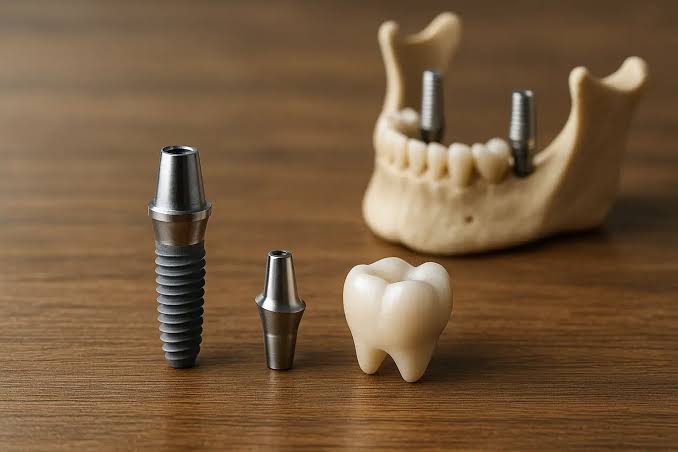
A dental implant is the fixture placed in the jaw. The visible replacement tooth is a separate restoration, usually a crown for one missing tooth. Treatment can also include consultation, imaging, planning, tooth removal, grafting, temporary replacement, implant placement, review appointments and the final restoration.
Not everybody needs every stage. A person with a healed space and suitable bone has a different plan from someone whose tooth still needs removal or whose bone requires augmentation.
When comparing dental implant cost Greensborough, ask whether each estimate covers the same treatment. One may quote only implant placement while another includes the connector and final crown. A lower headline is not a saving if important stages appear later.
The G Dental implant treatment page is the commercial page this article supports. An examination is needed to determine whether its treatment pathway applies to you.
The number of implants and teeth being replaced
Replacing one tooth commonly involves one implant and one crown. Several missing teeth do not always require one implant per tooth. In some cases, implants may support a bridge, but suitability depends on the space, bite, bone and wider oral health.
The number of fixtures affects surgical work, components and planning. The type and size of the final restoration also affect laboratory work.
Ask the dentist to show which teeth are being replaced and how many implants are proposed. The written plan should distinguish each fixture from each crown or bridge component.
If several options are clinically reasonable, compare their cleaning requirements, effects on neighbouring teeth, likely maintenance and material risks, not only the initial estimate.
The examination and imaging required
Implant planning begins with an examination of teeth, gums, bite and the proposed site. Imaging helps assess available bone and nearby structures. The dentist decides which images are justified for the individual case.
A two-dimensional dental X-ray and a three-dimensional scan provide different information. More imaging is not automatically better. The question is which view is needed to plan safely and whether its fee is included.
The Australian Dental Association explains that dental X-rays are used when clinically justified, rather than on a fixed assumption for every person. Tell the dentist about previous recent imaging so unnecessary repetition can be avoided where appropriate.
Ask whether the scan is performed at the practice or referred elsewhere, who reports it and whether a copy forms part of your records.
Whether the tooth still needs removal
If the tooth remains present, the plan may include extraction. The condition of the tooth, roots, surrounding infection and bone affects complexity and timing.
Implant placement may occur at the same appointment as removal in selected cases. In others, the area needs to heal first. Neither pathway is universally preferable.
Before assuming removal, ask whether preserving the tooth remains reasonable. Root canal therapy answers a different clinical problem and may be considered where the tooth can be restored.
The estimate should state whether extraction is included and what happens if the procedure is more complex than expected. No outcome should be guaranteed before the site is assessed.
Available bone and bone grafting
An implant needs sufficient bone in a suitable position. Bone can reduce after tooth loss or because of infection, gum disease, injury and individual anatomy.
Where available bone is limited, the dentist may discuss a graft. The amount and location influence the procedure, material, healing period and dental implant cost. A small graft may sometimes occur with implant placement, while a more substantial one may be staged separately.
Not every implant requires grafting. The dentist should explain what the scan shows and why a graft is recommended. G Dental’s guide to bone grafts for dental implants provides more background.
Grafting adds its own risks and does not guarantee that implant treatment will proceed exactly as planned. Ask what alternatives exist if you prefer not to have it.
Gum health and other dental care
Active gum disease, untreated decay or problems with neighbouring teeth may need attention before implant placement. This can add appointments but also addresses conditions that could affect the wider plan.
The dentist should separate preliminary health care from the implant procedure. Ask which treatment is necessary before placement, which can wait and which is unrelated.
Smoking, some health conditions and medicines may affect suitability or healing. Give a complete medical history and do not stop prescribed medicine without speaking to the prescribing clinician.
General information from Healthdirect on dental implant treatment can help you prepare questions, but your dentist must assess your mouth and health individually.
The implant system and components
Implant treatment involves several components, and systems are not interchangeable in every situation. The chosen system can affect component costs and future access to parts.
Ask the dentist to identify the implant system in your records and explain why it suits the case. This information may be helpful if you move or another practitioner maintains the restoration later.
The connector between the fixture and crown, called an abutment, may be standard or customised. Its selection depends on the position and restoration design.
Do not judge quality from a brand name alone. Planning, placement, oral health, restoration and maintenance all contribute, and individual outcomes vary.
The final crown or bridge
The visible restoration has its own design and laboratory stages. Material, size, position and aesthetic demands can affect the estimate.
A front tooth may require different planning from a less visible back tooth. The dentist considers appearance alongside bite and cleaning. No material is ideal for every site.
Ask whether a temporary tooth is needed while the implant heals and whether it is included. Temporary options vary according to the site and cannot always be supported by the new implant immediately.
The estimate should identify the final crown or bridge and laboratory work rather than ending at surgical placement.
Sedation, local anaesthetic and comfort planning
Implant placement is commonly performed with local anaesthetic. Some people may discuss additional options based on anxiety, health and procedure complexity.
No dental procedure can be advertised as pain-free or risk-free. Ask what you may feel during and after each stage, which pain relief may be appropriate and whom to call about a concern.
If sedation is considered, clarify who provides it, where, what monitoring occurs, and whether a support person and transport are required. This can affect both planning and cost.
Tell the dentist about previous reactions, allergies, sleep or breathing conditions and every medicine you take.
Treatment timing and staged costs
Implant treatment often occurs over several stages because bone and gum tissues need time to heal. The schedule depends on the starting condition, whether removal or grafting is required, and how healing progresses.
Ask for the estimate to show when each payment is expected. A staged plan can make the sequence clearer, but it is not the same as a payment plan.
It is important to remember that treatment may change if findings or healing differ from the initial expectation. Ask how revised work is discussed and approved.
Health funds and HICAPS
Health fund benefits for implant-related services vary by policy, waiting periods, annual limits and item numbers. The practice cannot guarantee what your fund will pay.
Request the proposed item numbers and ask your health fund for a written benefit estimate. Check whether different treatment stages fall in different benefit years.
G Dental offers HICAPS on-the-spot claiming for major health funds, subject to the claim and your cover. HICAPS convenience does not determine eligibility or benefit amount.
Do not choose treatment only to maximise a benefit. The clinical plan should be appropriate first, with cover considered as part of budgeting.
Comparing an implant with a bridge
A bridge and an implant replace a missing tooth differently. A conventional bridge uses neighbouring teeth for support, while an implant is supported in the jaw.
Which option suits you depends on the adjacent teeth, bone, gum health, bite, health, preferences and cost. A bridge may avoid implant surgery but can require preparation of supporting teeth. An implant avoids using those teeth in that way but involves surgery and healing.
G Dental also provides dental bridges. Ask for an honest comparison where both are reasonable.
Do not assume the more expensive option is automatically better or that one lasts for life. Both require care and may need maintenance or replacement.
Who may suit an implant, and who may not?
An implant may suit an adult with a missing tooth, adequate or graftable bone, manageable oral disease and health compatible with surgery. It may appeal to someone who wants to avoid preparing healthy neighbouring teeth for a conventional bridge.
It may not be suitable where growth is incomplete, disease is uncontrolled, anatomy prevents safe placement, health makes elective surgery inappropriate, or the person cannot maintain the area. These are examples, not a complete eligibility list.
A bridge, another restorative option or leaving the space under monitoring may be discussed. Dentures must not be offered in G Dental copy because that service remains unconfirmed.
Assessment comes before a decision. Advertising should not encourage implant treatment simply because a tooth is missing.
What should a written estimate include?
For dental implant cost Greensborough patients should compare the complete written scope, not an isolated implant-placement figure.
Ask for:
- Examinations and imaging
- Tooth removal if required
- Grafting and materials if required
- Implant placement and components
- Temporary replacement where proposed
- Review appointments
- The final crown or bridge
- Separately billed external services
- What may change after treatment begins
- Payment timing and any complete finance terms
Compare the same scope between practices. Ask questions about a missing line rather than assuming it is included.
Arrange an implant assessment in Greensborough
Bring recent dental records, scans if available, your medical history and a list of medicines. Write down whether your priority is function, avoiding changes to neighbouring teeth, timing, appearance or budget.
A personal dental implant cost estimate for Greensborough can only follow assessment of the site, oral health and restoration required.
G Dental is at 137 Grimshaw St, Greensborough. For an assessment and individual estimate, read about dental implants in Greensborough, call (03) 9435 6063 or use the website enquiry form. Thursday appointments are available until 8:00 pm, subject to current availability.
Frequently asked questions
1. Why can dental implant estimates differ?
They may cover different stages, components and restorations. Compare written inclusions as well as the total.
2. Does every implant need a bone graft?
No. Grafting depends on the available bone and proposed position. Imaging and assessment determine whether it is considered.
3. Is the crown included with the implant?
It depends on the estimate. Ask whether the fixture, abutment and final restoration are all included.
4. Can treatment be completed in one visit?
Some stages may be combined in selected cases, but final restoration often follows healing. Timing varies and cannot be guaranteed before assessment.
5. Will my health fund cover an implant?
Benefits depend on your policy and limits. Ask the fund to assess the proposed item numbers in writing.

