


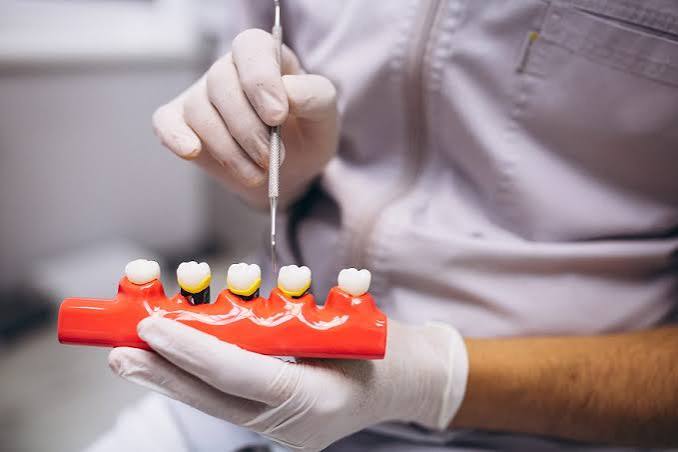

A filling repairs a defined area of lost tooth structure, while a crown covers most or all of the visible tooth to provide a different kind of protection and form. The decision depends on how much healthy tooth remains, where damage or decay sits, whether cracks are present, the forces on the tooth and its previous treatment.
An examination and appropriate X-rays are needed before choosing a dental crown or filling Greensborough. A larger restoration is not automatically better. The aim is to use an option that addresses the problem while preserving sound tooth structure where reasonably possible.
What does a filling do?
A filling replaces tooth structure removed because of decay or damage. Composite resin is commonly placed directly into the prepared area and shaped in the mouth.
Fillings can suit small to moderate defects where enough strong tooth remains to support the restoration. The exact limit depends on location, bite, shape and material rather than one universal size.
The dentist removes affected material, prepares the area and bonds or places the restoration. Local anaesthetic may be used. No procedure should be described as pain-free, and individual sensitivity afterwards varies.
G Dental provides fillings through its general dentistry services. An assessment determines whether a direct filling is suitable.
What does a crown do?
A dental crown is a custom restoration covering the prepared visible part of a tooth. It can restore shape and provide coverage where a filling would leave weakened sections unsupported.
Crowns may be considered for a tooth with extensive loss, a large failing filling, certain cracks, heavy wear or after root canal treatment. This does not mean every root-treated tooth or crack automatically needs the same restoration.
Treatment usually involves preparing the tooth, recording its shape, fitting a temporary restoration where required and later placing the final crown. Digital or conventional impressions may be used.
The G Dental crown service should explain the practice’s current materials and sequence. Those details require confirmation before publication.
How much healthy tooth remains?
Remaining structure is one of the main considerations. A small cavity surrounded by strong enamel may be suited to a filling. A very large old filling with thin walls of tooth around it may need a different design.
The dentist considers not only the size visible from above but also depth, location and whether the supporting edges are sound. X-rays can help show decay between teeth or beneath an existing restoration, although not every crack appears on an X-ray.
Removing extra healthy tooth simply to place a crown is not automatically justified. Conversely, placing a very large filling where the remaining tooth cannot support biting forces can lead to fracture or early failure.
Ask the dentist to show which structure is healthy, damaged or being removed and why the proposed restoration needs its particular coverage.
Is the tooth cracked?
Cracks vary from superficial lines to fractures extending deeper into the tooth or root. Symptoms can include pain on biting or release, temperature sensitivity or intermittent discomfort, but some cracks have few symptoms.
A crown may help protect parts of a tooth in selected cases, but it cannot guarantee that a crack will stop or that the nerve will remain healthy. A crack extending into an unfavourable area may make the tooth unsuitable for restoration.
The diagnosis can involve examination, bite tests, magnification, light, removal of an old filling or imaging. Uncertainty should be discussed before treatment.
If a tooth breaks suddenly, keep fragments where practical and call the practice. Same-day appointments may be available within opening hours, but are subject to clinical and appointment availability.
Has the tooth had root canal treatment?
Root canal treatment removes infected or inflamed tissue from inside the tooth and seals the canal system. The tooth then needs a suitable final restoration.
Back teeth may have lost substantial structure from decay, previous fillings and access for treatment. A crown or onlay may be discussed to protect remaining cusps. Front teeth have different loads and may not require the same approach in every case.
G Dental’s root canal therapy information explains the underlying treatment. Ask whether the proposed final restoration is included in any estimate.
Root canal treatment and a crown are separate procedures with different purposes. Neither guarantees that the tooth will last indefinitely.
How does the bite affect the choice?
Teeth at the back commonly carry strong chewing forces. Clenching or grinding can increase load. A restoration must fit the way upper and lower teeth meet.
The dentist may look for wear, chipped edges, muscle tenderness or a history of broken restorations. A protective splint may be discussed for some people, but it does not make a poorly supported restoration appropriate.
A high spot after treatment can make a tooth tender. Contact the practice if the bite feels uneven rather than waiting for it to wear down.
Material and design choices should be explained in relation to the position and bite, not described with broad claims that one product is strongest for everyone.
What is an onlay, and where does it fit?
An onlay is a custom restoration covering part of the chewing surface and one or more cusps without necessarily covering the entire visible tooth. It can sit between a direct filling and full crown in terms of coverage.
An onlay may preserve more tooth structure where complete coverage is not needed. It still requires enough suitable tooth for bonding or support and may involve laboratory or digital manufacturing stages.
Not every practice uses the same terminology, and inlays, onlays and partial crowns can overlap in discussion. Ask the dentist to show the proposed design on a model or image.
What materials are used?
Direct fillings commonly use composite resin. Crowns and onlays can use ceramic, metal-containing materials or other options, depending on the tooth and practice.
Each material has trade-offs involving appearance, required thickness, repair, wear against opposing teeth and suitability for the location. No one material is universally superior.
Tell the dentist about metal allergies or previous reactions. Ask what material is recommended, why, and whether another reasonable option exists.
How many appointments are involved?
A direct filling is often placed in one appointment. A laboratory-made crown commonly involves preparation, a temporary restoration and a later fitting. Digital workflows may differ.
Do not treat appointment count as the only measure of convenience. The condition of the tooth, treatment quality, laboratory process and time needed for assessment matter.
Ask how long the temporary stage may last, which foods or habits to avoid and what to do if the temporary comes off. A temporary crown protects a prepared tooth but is not designed as the final restoration.
Treatment timing can change if decay is deeper than expected or the tooth’s nerve becomes symptomatic.
What changes the cost?
A dental crown or filling Greensborough estimate should identify which restoration is proposed and why, because these are different procedures rather than two prices for identical work.
No price appears because G Dental figures require confirmation and complete inclusions. Cost varies with restoration type, material, tooth position, diagnostic work, removal of an old restoration, foundation work, laboratory stages and any other treatment required.
Ask whether the estimate includes X-rays, temporary restoration, core build-up, laboratory work, fitting and reviews. Root canal treatment, gum treatment or a splint may be separate.
Health fund benefits depend on your policy, item numbers, limits and waiting periods. Request a written estimate from the fund. G Dental offers HICAPS on-the-spot claiming subject to your cover.
Compare like with like. A filling quote and a crown quote are not two prices for the same procedure; they represent different plans.
How long will each option last?
No responsible answer can promise a fixed lifespan. Longevity depends on the remaining tooth, restoration size and material, bite, grinding, oral hygiene, diet, disease risk and accidents.
A small filling and a large filling do not carry the same demands. Crowns can fracture, loosen or develop decay at their margins. Natural teeth beneath restorations can still need treatment.
Ask what maintenance is required and which warning signs need review. Regular examinations allow the dentist to assess restorations, but cannot guarantee that every problem will be prevented.
The choice should aim for an appropriate restoration now while acknowledging future maintenance.
Who may suit a filling?
The dental crown or filling Greensborough decision begins with how much sound tooth remains and whether that structure can support a direct restoration.
A filling may suit a tooth with a defined area of decay or damage and enough healthy structure to support a direct restoration.
It may be less suitable where the defect is extensive, important cusps are thin, a crack needs broader protection or repeated large fillings have failed.
The dentist should explain why the remaining tooth can or cannot support the filling. Preserving structure is valuable, but an under-designed restoration is not conservative if it fails quickly and removes more tooth later.
Monitoring may sometimes be appropriate for very early changes, depending on disease activity and ability to manage risk.
Who may suit a crown or onlay?
A crown or onlay may suit a heavily restored, weakened or cracked tooth where greater coverage is expected to protect remaining structure. Root-treated back teeth are another group often assessed for cuspal coverage.
It may not suit a tooth that cannot be predictably restored, a person whose oral disease needs management first, or a situation where a smaller restoration is sufficient.
Extraction and replacement options may be discussed if the tooth is not restorable, but G Dental must not claim wisdom-tooth extraction or other unconfirmed services.
You can ask for time to consider elective options and seek another professional opinion.
What questions should you ask?
- What is wrong with the tooth?
- How much healthy structure remains?
- Is there evidence of a crack?
- Could a filling, onlay and crown all be considered?
- What are the trade-offs of each?
- What material is proposed and why?
- What does the estimate include?
- Could root canal or gum treatment be needed?
- What uncertainty remains?
- What happens if I monitor it for now?
The dentist should be able to explain the recommendation without relying on a model image of a perfect outcome.
Arrange an assessment in Greensborough
For a dental crown or filling, Greensborough patients need an examination rather than choosing solely from descriptions online.
Bring details of symptoms, previous dental records where relevant, your health history and a list of medicines. If a fragment has broken away, keep it and bring it with you.
G Dental is at 137 Grimshaw St, Greensborough. To discuss whether a dental crown or filling suits the tooth, read about dental crowns, call (03) 9435 6063 or use the enquiry form. Same-day appointments may be available within opening hours for urgent problems.
Frequently asked questions
1. Is a crown always better than a large filling?
No. The appropriate option depends on remaining structure, cracks, bite and other findings. A crown also requires tooth preparation.
2. Can a crown prevent a cracked tooth from worsening?
It may protect selected cracks, but cannot guarantee that a crack will not progress or the nerve will remain healthy.
3. Does every root canal tooth need a crown?
Not every tooth is the same. Position, remaining structure and bite affect the final restoration.
4. Can a filling be replaced with another filling?
Sometimes. The dentist must assess decay, cracks and how much sound tooth remains after removal.
5. Will my health fund cover a crown?
Benefits depend on your policy and limits. Ask the fund to assess the proposed item numbers in writing.

