


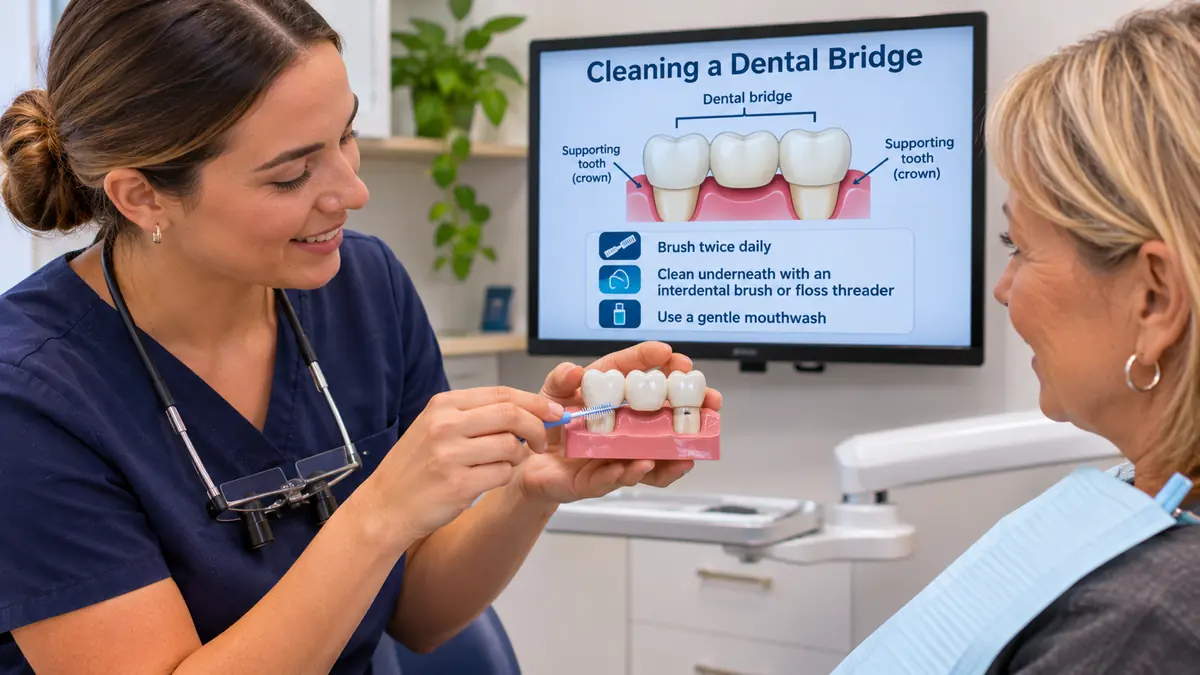

A fixed dental bridge replaces a missing tooth by attaching an artificial tooth to supports beside the gap. The false tooth is called a pontic. You cannot remove a fixed bridge at home, and an ordinary toothbrush cannot clean every surface beneath it. Cleaning a dental bridge therefore includes brushing the visible surfaces and carefully cleaning the space under the pontic and around the supporting teeth every day. A floss threader, suitable interdental brush or water flosser may help, but the right tool depends on the bridge design and the space available. If the bridge moves, floss catches at an edge, the gum repeatedly bleeds, or you notice a persistent bad taste, arrange a dental review. We can show you the route the cleaning tool should take around your own bridge.
People often leave a bridge appointment confident about brushing, then get home and wonder how floss is supposed to pass through a joined set of teeth. That is a reasonable question. The bridge may feel like one solid piece, yet the gum beneath it and the natural supporting teeth still need care.
In this guide, we explain what to clean, which tools may fit, how to build a routine and what changes deserve an appointment. We will also separate ordinary maintenance from problems that cleaning alone cannot solve.
Understand the parts you are cleaning
A bridge can be supported by natural teeth, implants or a combination determined by the treatment plan. A conventional tooth-supported bridge has crowns on supporting teeth, called abutments, and one or more pontics spanning the missing-tooth space. Other designs, including adhesive bridges, attach differently.
This matters because plaque can collect in several places:
| Area | Why it needs attention | What we check at review |
| Crown margins | Natural tooth remains beneath the restoration | Decay, fit and gum response |
| Under the pontic | A brush may miss the surface facing the gum | Plaque, food and tissue irritation |
| Between bridge and neighbouring teeth | Contacts may trap food | Cleaning access and contact shape |
| Around an implant support | Inflamed tissue can affect implant health | Gum condition, cleaning and restoration fit |
Why ordinary floss does not pass through
The connected units of a fixed bridge block the usual route for sliding floss down between teeth. Trying to snap floss through the joined crowns can fray it or put force on a margin. Instead, you guide a suitable cleaning aid under the pontic from the side, then sweep it along the surface facing the gum.
Leeds Teaching Hospitals advises sweeping floss beneath the false tooth along the gumline. The exact path depends on your bridge, so ask us to demonstrate it rather than relying on a diagram of another design.
If the space seems sealed, do not force a tool through. A very tight contact, a changed gum contour or cement at the margin may need professional assessment.
Choose a tool that fits the bridge
Several tools can clean under or around a bridge. They are alternatives and complements, not a contest with one universal winner.
| Tool | Where it can help | Common difficulty |
| Floss threader with floss | Guiding floss beneath a pontic | Requires a clear entry point and practice |
| Stiff-ended bridge floss | Threading and sweeping in one product | Size may not suit every space |
| Interdental brush | Open spaces beside supports | Oversized brushes can injure gums |
| Water flosser | Rinsing difficult contours | May not remove all attached plaque alone |
| Soft toothbrush | Visible crown and gumline surfaces | Cannot reach every underside area |
Cleaning a dental bridge: a daily routine that is realistic
The aim is consistent cleaning, not an elaborate procedure that lasts one week. Most people can incorporate the bridge into their normal evening routine.
- Brush all teeth and bridge surfaces with fluoride toothpaste and a soft brush.
- Angle the bristles gently toward the gumline around the supporting teeth.
- Thread the selected floss or cleaner beneath the pontic as demonstrated.
- Sweep along the underside and around the supports without snapping into the gum.
- Clean the other side of the bridge and adjacent teeth.
- Rinse the tool and check that no food remains trapped.
Do not treat a water flosser as permission to ignore areas where plaque remains attached. Equally, do not abandon cleaning because ordinary floss feels awkward. Ask for a different tool or a demonstration.
What if food keeps getting trapped?
Occasional food under a pontic can happen. Persistent trapping in one spot may point to a contact, gum or restoration issue. The cause determines whether technique, a different tool or dental work is needed.
We look for an open contact, a rough edge, a change in gum shape, decay at a supporting tooth or a bridge that is no longer seated as intended. Our food guide repeatedly getting stuck between teeth explains why the same site catching food each day deserves a closer look.
Avoid sharp toothpicks and metal picks. They can scratch a restoration or injure tissue without correcting the cause.
What should the gums look and feel like?
The gum beneath a bridge should be examined as part of routine dental care. Brief tenderness while learning a new technique can occur, but repeated bleeding, swelling, bad taste or a sore area should be assessed.
These signs do not prove the bridge has failed. They may reflect plaque, a difficult cleaning path, gum disease or a fitting problem. We check the tissue and restoration together. If you have a history of periodontal disease, the review interval and tools may differ from those recommended for someone with healthy gums.
Do not stop cleaning simply because a small area bleeds once. Use gentle technique and let us know if bleeding persists or increases.
Can you damage a bridge by cleaning it?
Normal brushing and properly sized interdental cleaning should not dislodge a sound fixed bridge. Forcing a thick brush into a narrow space, pulling hard against a loose unit or scraping with metal can cause harm.
If the bridge feels mobile, stop testing it with your tongue or fingers. Keep chewing away from that side and call us. Do not attempt to glue it with household adhesive. We need to inspect the supporting teeth and the reason it moved before deciding whether it can be reattached.
Bridge care if you also have implants
Implant-supported bridges need a cleaning plan that reaches each implant and the underside of the connected restoration. The tissues around implants can become inflamed when plaque accumulates, even though an implant itself cannot decay.
We may recommend a different brush size, a specific floss path or professional maintenance appointments. Bring any cleaning aid you already use to the review. We can check whether it reaches the area intended without injuring the tissue.
Our dental implant service information covers assessment and treatment planning. Once the final restoration is fitted, ongoing maintenance has a different focus: cleaning, fit and the health of the surrounding tissues.
Eating and habits that affect a bridge
A bridge is made for ordinary function, but concentrated force and repeated habits can strain it. Avoid using teeth to open packaging, chewing ice or biting hard objects. Tell us if you clench or grind, because the bite may need assessment and a protective appliance may be discussed.
Sticky food is less important as a blanket ban than as a prompt to clean. If a particular food repeatedly catches under the pontic, mention it. The bridge may have a contour that can be improved, or you may need a better cleaning route.
Do not assume the bridge should feel exactly like a natural tooth. A short adjustment period can occur. Persistent pain on biting or a feeling that the bridge hits first is a reason to call.
What happens at a maintenance appointment?
We review more than whether the bridge is still in place. Depending on the findings, we may assess:
- the fit and stability of each unit
- the condition of the gum and supporting teeth
- plaque beneath the pontic
- signs of decay at crown margins
- the bite and wear marks
- whether floss or an interdental brush passes correctly
- X-rays where clinically justified
Bring up any snagging, smell, tenderness or food trap, even if it seems small. Those details can help us find the exact area that is difficult to maintain.
When to call sooner
Call if the bridge becomes loose, a piece breaks, pain persists, swelling develops or you cannot clean beneath it. Seek urgent care if facial swelling is significant, you feel unwell or swallowing or breathing is affected.
Do not wait for a routine check-up if the bridge has lifted. A loose bridge can expose a supporting tooth or trap food underneath. Until you are seen, avoid chewing on that side and keep the area as clean as you can without forcing the restoration.
Let us show you the route
Cleaning a dental bridge is easier once you have seen the tool move under your own restoration. Bring your floss or brush to a review at G Dental, 137 Grimshaw Street, Greensborough. We can assess the bridge, demonstrate the technique and discuss any difficult spots.
Call (03) 9435 6063 or send us an enquiry to arrange a suitable appointment.
Frequently asked questions
1. Can I floss a fixed dental bridge?
Yes, but you usually need to guide floss beneath the false tooth rather than pass it between joined units from above. We can demonstrate the route for your bridge.
2. Is a water flosser enough?
It can help rinse difficult areas. Whether it replaces another interdental method depends on the bridge design and how well plaque is being removed at your reviews.
3. How often should I clean beneath the bridge?
Daily cleaning is a useful baseline. Your dentist may recommend a more specific routine based on gum health, bridge design and your ability to reach the area.
4. Why does my bridge smell?
Trapped food or plaque may be the cause, but a persistent odour can also accompany decay or gum inflammation. Arrange an examination rather than masking it with mouthwash.
5. Will the bridge last forever if I clean it well?
No restoration can be promised to last forever. Cleaning, the health of its supports, bite forces and regular reviews all influence its useful life.

