


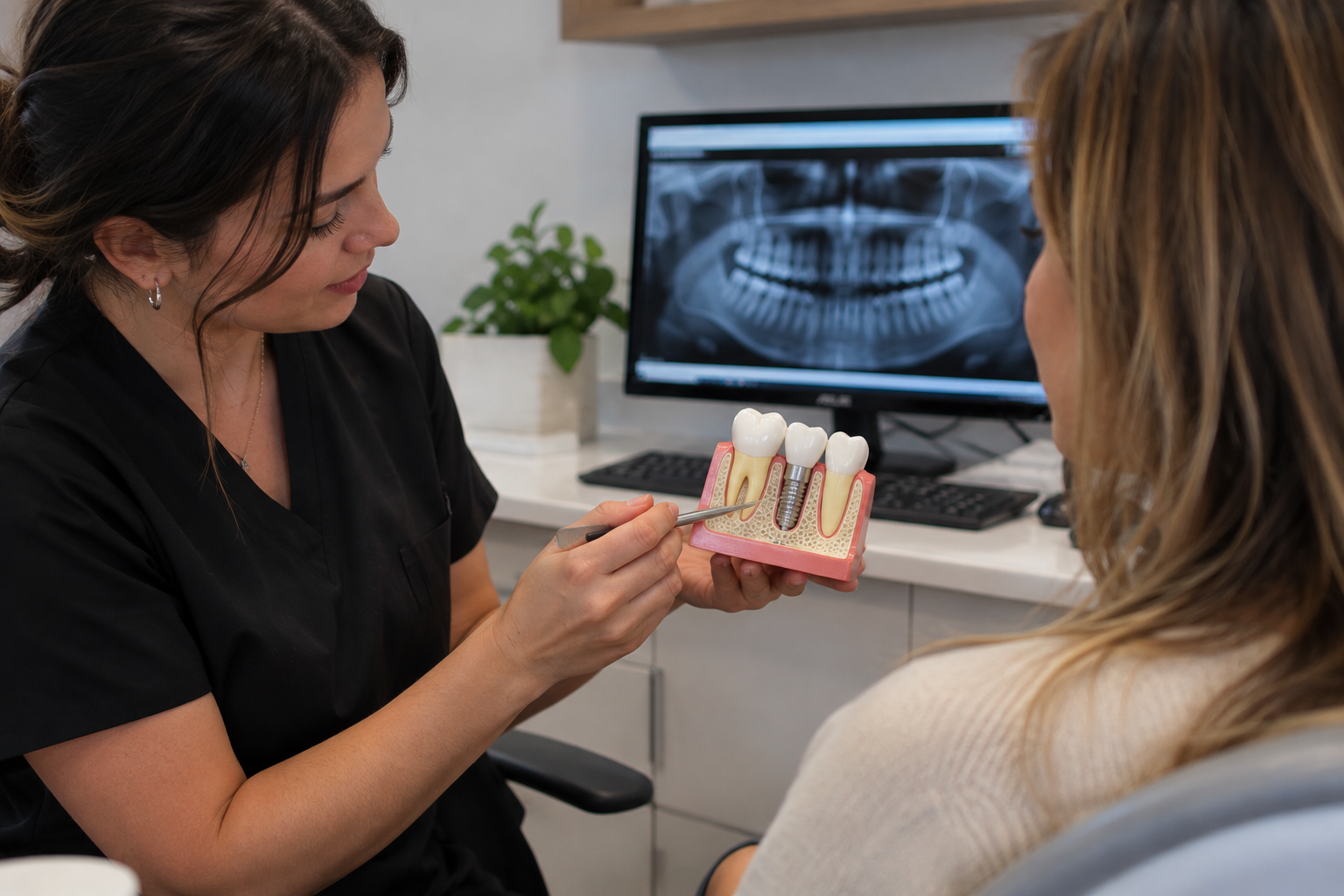

Dental implant healing happens in stages. The gum begins healing soon after placement, while the implant and surrounding bone need a longer period to form a stable biological connection. The final tooth is not always fitted immediately, and the sequence varies with the implant site, bone, gum health and whether other procedures were required.
When we discuss dental implant healing stages, Greensborough patients often want a single date when everything will be finished. A responsible plan gives milestones rather than promising an identical timetable for everyone. This guide explains the usual sequence, what you may notice, which symptoms require a call and why maintenance continues after the final restoration is fitted.
Stage one: assessment and planning
Healing is influenced before surgery takes place. We assess the missing-tooth area, neighbouring teeth, bite, gum health, available bone, medical history, medicines and habits that may affect care. Appropriate imaging may be required.
Planning may identify a need for:
- treatment of active decay or gum disease
- extraction and a separate healing period
- bone grafting or another site-development procedure
- coordination with a medical practitioner
- changes to smoking or oral-hygiene habits
- a temporary tooth during treatment
- staged rather than immediate placement
An implant is not automatically suitable for every missing tooth or every patient. We explain alternatives and reasons for any recommended preparatory care.
Stage two: the first 24 to 48 hours
After implant placement, a blood clot and early healing response form around the surgical area. Some swelling, tenderness and light oozing can occur. The amount varies with the procedure and the person.
In the earliest dental implant healing stages, Greensborough patients should use their own written post-operative instructions as the reference, because the advice may differ after grafting, extraction or immediate temporary restoration.
Follow the written instructions provided by the treating dentist. They may cover:
- pressure with gauze if advised
- prescribed or recommended medicines
- suitable food and fluid choices
- cleaning around, but not traumatising, the site
- avoiding smoking and alcohol as directed
- activity restrictions
- when to begin any recommended mouth rinse
- the date of review or suture removal
Do not add medicines or home remedies without checking whether they are appropriate for you. If bleeding is persistent or heavy, call the practice for advice.
Stage three: early gum healing
Over the following days and weeks, the gum edges continue to close, and inflammation should generally reduce. Sutures may dissolve or be removed, depending on the material used.
The surface can feel different from day to day. The key is the direction of change. Improving tenderness and swelling are different from symptoms that intensify after initially settling.
| Observation | General response |
| Mild swelling that begins to settle | Continue the provided care instructions |
| Bruising without worsening symptoms | Monitor and mention it at review |
| Increasing pain, heat or swelling | Call the practice promptly |
| Pus, unpleasant discharge or fever | Seek prompt dental or medical advice |
| Ongoing heavy bleeding | Contact the dentist urgently |
| Implant component or temporary tooth feels mobile | Do not test it; call the practice |
This table cannot diagnose the site. Call us whenever your recovery does not match the instructions you were given.
Stage four: osseointegration
Osseointegration is the biological process in which bone forms close contact with the implant surface. It happens below the gum and cannot be judged from appearance alone.
This stage commonly takes months rather than days. The timeframe depends on the jaw, bone quality, implant stability, site-development procedures, health and loading plan. An area that feels comfortable is not necessarily ready for the next stage.
During osseointegration, we may ask you to avoid loading the area in a particular way and attend review appointments. Those reviews allow us to examine the gum, temporary restoration and other clinical signs before progressing.
Immediate, early and delayed loading
“Immediate implant” can describe several different timing decisions. Implant placement may occur at the time of extraction, and a temporary tooth may sometimes be fitted early. That does not mean the final restoration is complete or that the implant has finished integrating.
| Approach | Plain-English meaning | Important point |
| Immediate placement | Implant placed when the tooth is removed | Suitability depends on the site and stability |
| Immediate provisional restoration | Temporary tooth connected soon after placement | It may be kept out of normal biting contact |
| Delayed loading | Implant heals before a tooth is attached | Often chosen where protection is needed |
| Final restoration | Definitive crown or bridge fitted after assessment | Bite and cleanability still require review |
We choose timing from clinical conditions, not because one option sounds faster in advertising.
What if bone grafting was needed?
Bone grafting can add another healing stage. It may occur before implant placement or at the same appointment in selected cases. The graft and implant site each need protection and monitoring.
The presence of a graft does not provide a universal timeline. Extent, location, material, gum closure and individual response affect the sequence. Follow the specific restrictions and review schedule provided for your procedure.
Our article on bone grafting for dental implants explains why grafting may be considered and the questions worth asking before care.
Stage five: uncovering and shaping the gum
Some implants heal with a component visible through the gum. Others are covered during healing and later uncovered in a smaller procedure. A healing abutment may then shape the gum before the final tooth is made.
Not every implant follows the same sequence. If uncovering is required, the dentist explains local care and the interval before impressions or scanning.
At this point, the implant’s stability, tissue health and restoration space are assessed. Progress is not based only on elapsed time.
Stage six: impressions, scans and the final tooth
Once the implant is considered ready, records are taken for the crown, bridge or other planned restoration. The dental laboratory and clinician work with implant position, available space, bite and appearance.
The appointment sequence may involve:
- a scan or impression
- shade and shape information
- laboratory manufacture
- a fitting appointment
- bite and contact adjustments
- cleaning instructions
- a review schedule
The restoration should allow practical cleaning. Appearance matters, but so do load, access and the health of the surrounding gum.
Eating during the stages
Dietary advice depends on the surgery and temporary restoration. Early meals are commonly chosen to reduce trauma to the site, but follow the list provided by your dentist.
Useful principles may include:
- choose foods that require less force initially
- avoid chewing directly on the site when instructed
- do not use the temporary tooth to test stability
- maintain nutrition and hydration
- avoid very hot food or drink while numb
- progress texture according to clinical advice
If eating remains difficult beyond what was discussed, call rather than adapting the appliance or avoiding food groups for an extended period.
Cleaning without disturbing healing
Plaque control matters, but the surgical area may require a modified routine at first. We explain which areas to brush, which to avoid temporarily and whether a rinse or special brush is recommended.
Once healed, implant restorations still require daily cleaning. Depending on the design, that can involve toothbrushes, interdental brushes, flossing aids or water irrigation. The Better Health Channel’s information on teeth and gum care provides general preventive guidance, while your clinician demonstrates the method for your restoration.
Factors that can affect healing
No list predicts an individual result, but relevant factors can include:
- current gum and dental health
- bone quantity and quality
- smoking or vaping
- diabetes and its management
- medicines and medical conditions
- grinding or heavy bite forces
- oral hygiene
- implant site and surgical complexity
- adherence to loading and review instructions
Tell us about your complete health history and medicines. Do not stop prescribed medicine without advice from the prescriber.
Warning signs and when to call
Contact the practice promptly for worsening pain or swelling, persistent bleeding, discharge, fever, a bad taste that does not settle, numbness that concerns you, or movement of an implant component or temporary restoration.
For severe facial swelling, difficulty breathing or swallowing, uncontrolled bleeding or serious illness, seek urgent medical care. Healthdirect explains when to call triple zero.
Calling does not mean something has definitely failed. It gives the clinical team enough information to decide whether advice, review or urgent care is appropriate.
Long-term maintenance is another stage
The final crown is not the end of implant care. Implants cannot develop decay, but the surrounding gum and bone can become inflamed, and components can wear or loosen.
The later dental implant healing stages Greensborough patients sometimes overlook are restoration review and continuing maintenance. These appointments help us assess the gum, bite, cleaning access and implant-supported tooth after active healing has finished.
Long-term care includes:
- daily cleaning around the restoration
- dental examinations at the recommended interval
- professional cleaning suited to the implant
- review of gum bleeding or swelling
- checking the bite and restoration
- monitoring grinding or clenching where relevant
- avoiding smoking
- reporting movement promptly
Maintenance is part of the original treatment decision and should be discussed before placement.
Discuss your implant timeline with our Greensborough team
Understanding dental implant healing stages Greensborough patients may experience begins with an individual assessment. G Dental is located at 137 Grimshaw Street, Greensborough, and our implant page publishes current treatment information without us inventing figures in this article.
Call G Dental on (03) 9435 6063 or read about dental implants in Greensborough. We will explain the proposed stages, alternatives and maintenance requirements before you decide.
Frequently asked questions
1. How long does the whole implant process take?
It varies with extraction timing, bone and gum procedures, healing and restoration. We provide a sequence after assessment rather than publishing one promise for everyone.
2. Is swelling normal?
Some swelling can occur after surgery. Follow your instructions and call if it is marked, worsening, associated with fever or otherwise concerns you.
3. Can I work the next day?
That depends on the procedure, your work and your response. Discuss time away from work before the appointment.
4. Will I have a tooth during healing?
Temporary options depend on the site, stability and wider plan. We discuss appearance and function during planning.
5. How do I know the implant has integrated?
You cannot confirm this from comfort or appearance at home. The clinician assesses healing and stability before progressing.

