


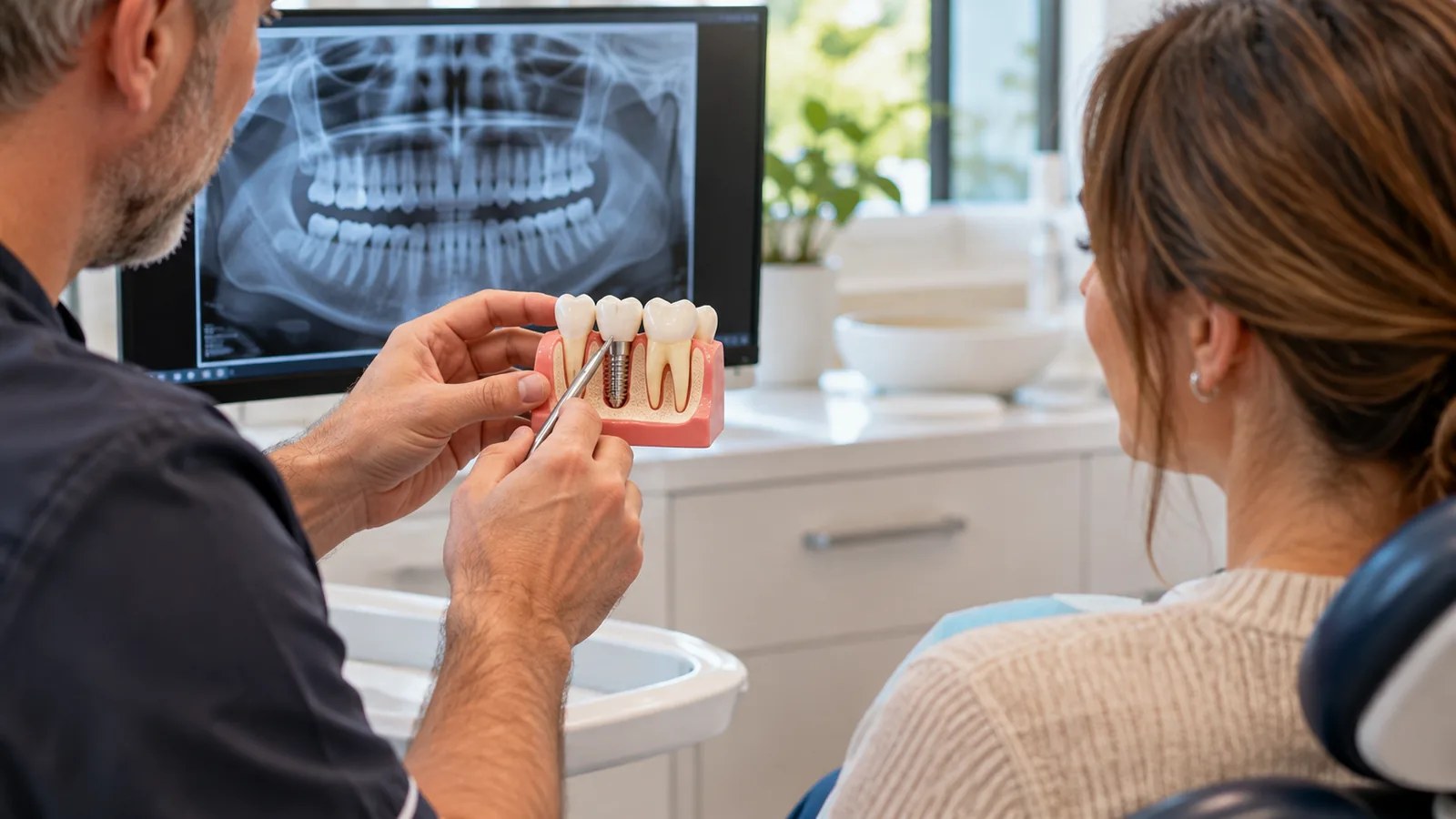

Previous gum disease does not automatically rule out dental implants, but active disease needs assessment and usually treatment before implant placement. The amount of bone support, current gum stability, cleaning ability, smoking, health and maintenance commitment all influence suitability.
When we assess dental implants after gum disease, Greensborough patients need a plan for both the missing tooth and the condition that contributed to tooth loss. An implant is not immune to plaque-related inflammation. This guide explains stabilisation, bone assessment, possible treatment pathways and the long-term reviews needed around an implant.
What is gum disease?
Gum disease ranges from gingivitis, which affects the gum, to periodontitis, which involves loss of supporting tissues and bone around teeth. It may cause bleeding, swelling, recession, bad breath, loose teeth or no obvious discomfort.
An implant replaces a missing tooth root and supports a restoration. It does not cure the biological tendency or behaviours associated with previous periodontal disease.
Why active gum disease is addressed first
Placing an implant while disease remains uncontrolled can expose the new site to an unhealthy oral environment. The first objective is to diagnose and stabilise disease around the remaining teeth.
Care may include:
- detailed gum measurements
- appropriate radiographs
- professional cleaning above and below the gumline
- improved daily plaque removal
- management of contributing factors
- review of healing and tissue response
- referral to a periodontist where indicated
Treatment does not produce a permanent “all clear”. Periodontitis is commonly managed through continuing maintenance and risk control.
What do we assess before recommending an implant?
Assessment connects the implant site with the whole mouth. We consider:
| Area | Why it matters |
| Current gum inflammation | Active bleeding and deep pockets may need care first |
| Previous bone loss | Affects available support and implant position |
| Plaque control | Implants require reliable daily cleaning |
| Remaining teeth | Disease elsewhere can influence the overall plan |
| Smoking | Associated with healing and periodontal risks |
| Diabetes and health | May affect healing and risk management |
| Bite and grinding | Influence load on the restoration |
| Maintenance attendance | Long-term monitoring is part of treatment |
We also ask why the tooth was lost. Trauma, decay and periodontitis create different starting conditions.
How do we know gum disease is stable?
Stability is judged from clinical findings over time rather than one symptom disappearing. Reduced inflammation, improved plaque control, suitable pocket measurements and no evidence of continuing rapid breakdown may support progression.
The exact criteria depend on the mouth and whether a periodontal specialist is involved. We may delay implant planning until the response to treatment is clear.
This is not an unnecessary pause. It tests whether the environment and home-care routine can support another restoration.
What if gum disease caused bone loss?
Implants need suitable bone in an appropriate position. Previous periodontitis, extraction and natural remodelling can reduce available width or height.
Possible pathways include:
- implant placement in the available site where suitable
- bone grafting before implant placement
- grafting at the time of placement in selected cases
- changing the implant position or restoration design
- choosing a bridge or another non-implant alternative
- deciding that implant treatment is not appropriate
Bone grafting is not automatically possible or required. Our guide to bone grafts for dental implants explains the purpose and limitations.
What is peri-implant disease?
Inflammation can develop in the tissues around an implant. Peri-implant mucositis affects soft tissue, while peri-implantitis involves supporting bone loss. These conditions are not identical to periodontitis around natural teeth, but plaque and previous periodontal history are relevant to risk.
Possible signs include bleeding, swelling, discharge, bad taste, recession or later-stage mobility. Problems can also develop without pain, which is why maintenance visits matter.
If an implant feels loose, do not assume the implant itself has failed. Sometimes a crown or screw is moving. Our article on a loose dental implant explains why prompt assessment is needed.
Does previous gum disease make implants impossible?
No, but it changes the conversation. Research reviews identify a history of periodontitis as a risk indicator for complications around implants, particularly when maintenance and plaque control are inadequate. Risk is not certainty, and a website cannot calculate an individual’s probability.
The decision balances:
- disease severity and stability
- available bone and soft tissue
- ability to clean the proposed restoration
- smoking and health factors
- alternatives to an implant
- willingness to attend maintenance
- the consequences if complications occur
We explain those trade-offs rather than presenting an implant as a replacement that cannot be affected by future disease.
Smoking, diabetes and other health factors
Smoking is associated with periodontal and implant complications. Diabetes, particularly when not well controlled, can also affect periodontal health and healing. Medicines and other conditions may require additional planning.
Tell us about smoking or vaping honestly and provide a complete medicine and health history. This information is used for safety and suitability, not judgement.
Do not change prescribed medicines without speaking with the prescribing practitioner. Where appropriate, we may coordinate with your GP or specialist with consent.
What daily cleaning may involve
Implant restorations need a design that you can clean. A single crown, bridge and full-arch restoration require different techniques.
Your routine may include:
- twice-daily brushing along the gumline
- interdental brushes selected for the available space
- floss or threaders where appropriate
- cleaning under an implant bridge
- tools demonstrated by the dental team
- attention to bleeding or changes
We ask you to demonstrate the routine where useful. “Brush better” is not enough; the aid must fit the restoration and your dexterity.
Why maintenance appointments matter
Maintenance is an active part of the implant plan. Reviews allow us to assess plaque, bleeding, pocket changes, the restoration, bite and bone where imaging is clinically appropriate.
| Review area | What we are checking |
| Gum condition | Inflammation, recession and cleanability |
| Implant restoration | Chips, loosening, wear and access |
| Bite | Changes or excessive contact |
| Remaining teeth | Ongoing periodontal stability |
| Home care | Whether tools and technique remain suitable |
| Risk factors | Smoking, health and medicines where relevant |
Review frequency is individual. Someone with previous advanced periodontitis may need a different maintenance interval from a low-risk patient.
Implant, bridge or another option?
An implant avoids preparing neighbouring teeth in some situations, but it requires surgery and suitable tissues. A dental bridge may be considered where neighbouring teeth already need crowns or implant risk is less acceptable. Leaving the space may also be reasonable in selected positions.
The comparison should cover:
- health of adjacent teeth
- bone and gum condition
- surgery and healing
- cleaning requirements
- expected maintenance
- treatment sequence
- possible complications
- personal priorities
We do not steer everyone towards the same replacement. The best plan is the one that fits the clinical conditions and informed preferences.
What changes the treatment cost?
We do not publish an unverified figure in a general article. Factors that can change the treatment include periodontal care, extraction complexity, imaging, grafting, the number of implants, temporary teeth and the final restoration.
G Dental’s implant service page publishes current indicative information with its own context. A written treatment plan after assessment is the appropriate source for your proposed care.
Questions to ask at the consultation
Use the appointment to understand the whole maintenance commitment:
- Is my gum disease currently stable?
- How much bone is available at the site?
- Is grafting being considered, and why?
- What alternatives should I compare?
- How will I clean the final restoration?
- Which factors increase my risk?
- How often may maintenance be recommended?
- Which symptoms should prompt a call?
- What happens if the implant is not suitable?
Clear answers make dental implants after gum disease Greensborough planning more realistic.
Start with gum stability, not the implant product
For dental implants after gum disease, Greensborough patients should begin with a complete gum and implant assessment. G Dental is at 137 Grimshaw Street, Greensborough.
Call us on (03) 9435 6063 or review our dental implant service. We will explain whether the disease needs further care, which replacement options are reasonable and what long-term maintenance would involve.
Frequently asked questions
1. Can an implant get gum disease?
Implants can develop plaque-related inflammation and bone loss around them. The terminology differs, but daily cleaning and professional monitoring remain essential.
2. Must every gum pocket disappear before an implant?
Treatment goals are individual. The clinician assesses disease stability across the mouth, not one number in isolation.
3. Can bone grow back after gum disease treatment?
Some regenerative procedures may be considered in selected defects, but lost support does not simply return after cleaning. The treatment team explains realistic objectives.
4. Will a bone graft guarantee implant placement?
No. Grafting has risks and uncertainties, and the final decision depends on healing and the wider assessment.
5. Do I need a periodontist?
Some patients can be managed in general practice, while complex or advanced disease may warrant specialist periodontal input.

